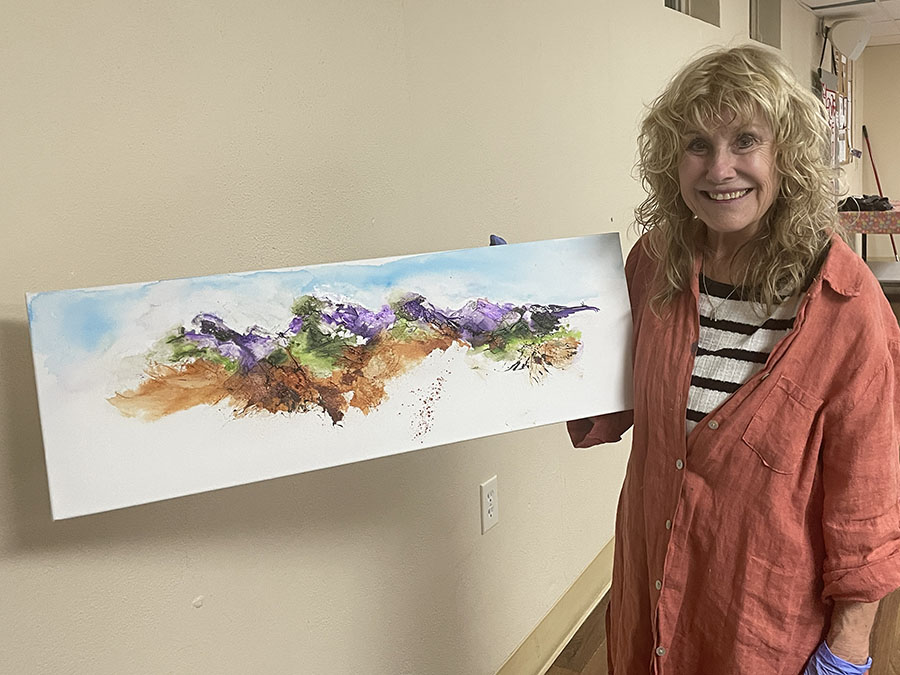
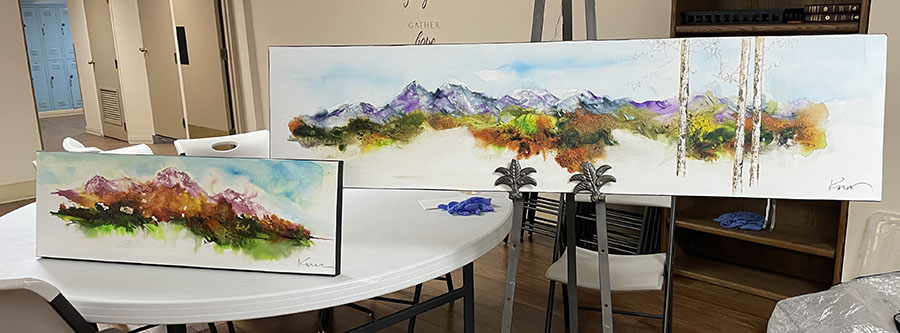
Our very own Signature Member, Karen Standridge, was our guest speaker for April. Karen always dreamed of being an artist, but her working life was spent teaching college English and literature. She retired early from college teaching to pursue the dream of painting and gallery representation.
In 2011, Karen, along with 3 other artists, realized her dream and founded Gallery 113, a local artists’ co-op gallery, located in downtown Colorado Springs.
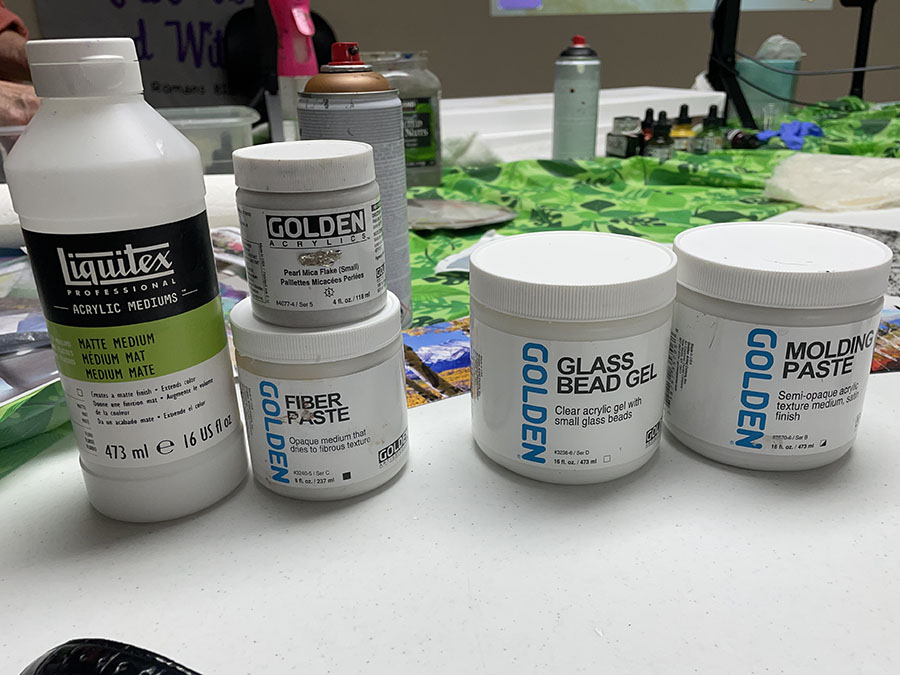
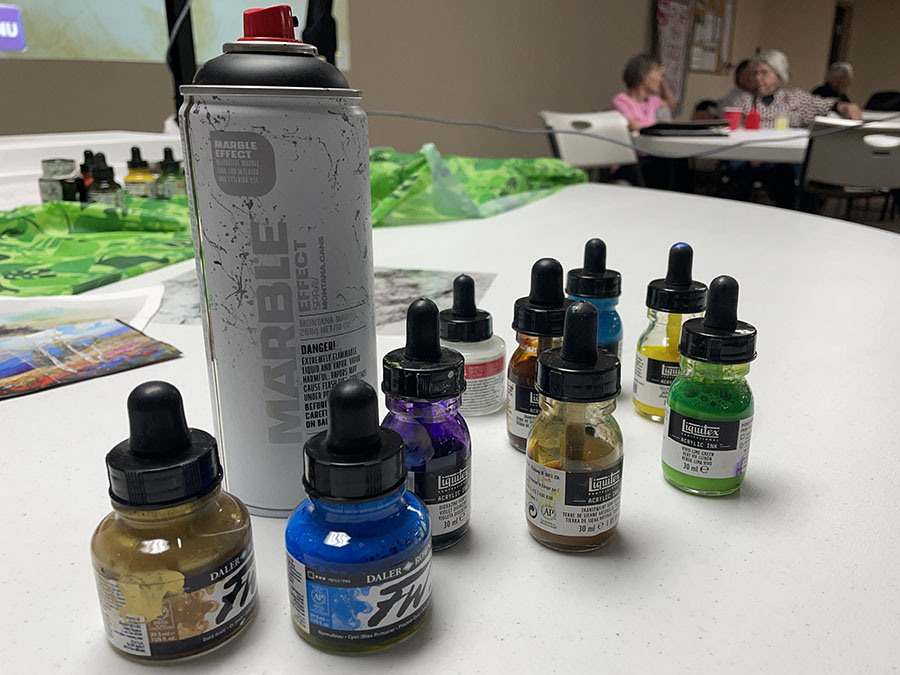
Karen’s art is very unique and full of texture! She uses many products to achieve her one-of-a-kind style.
Karen is a firm believer in three things: The Rule of Thirds, using a color wheel, and reference photos.
After years of painting traditional watercolors, Karen said she is still a ‘Watercolor Baby,’ and likes to leave lots of white space in her art!
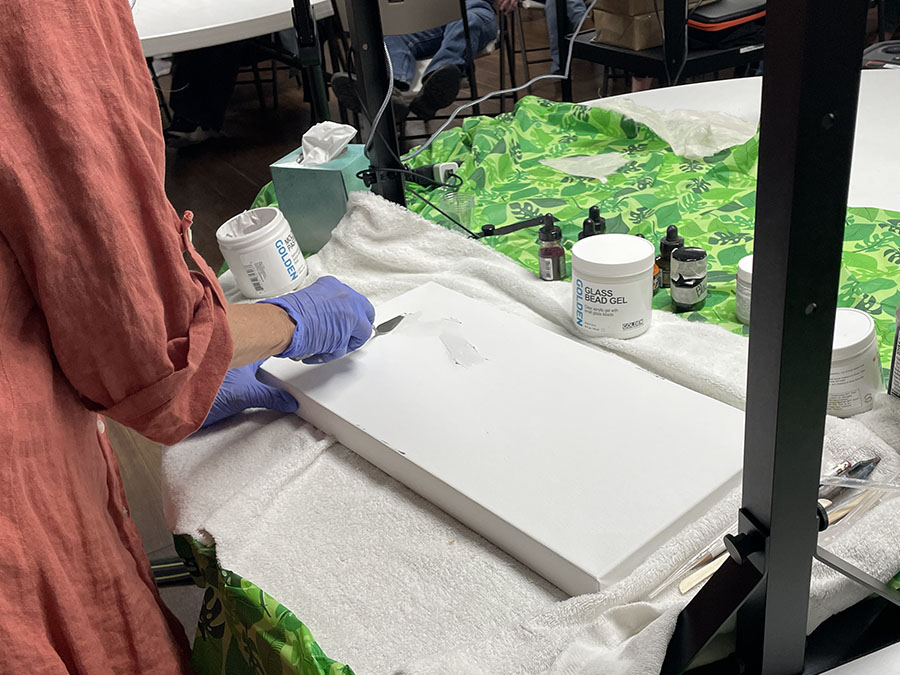
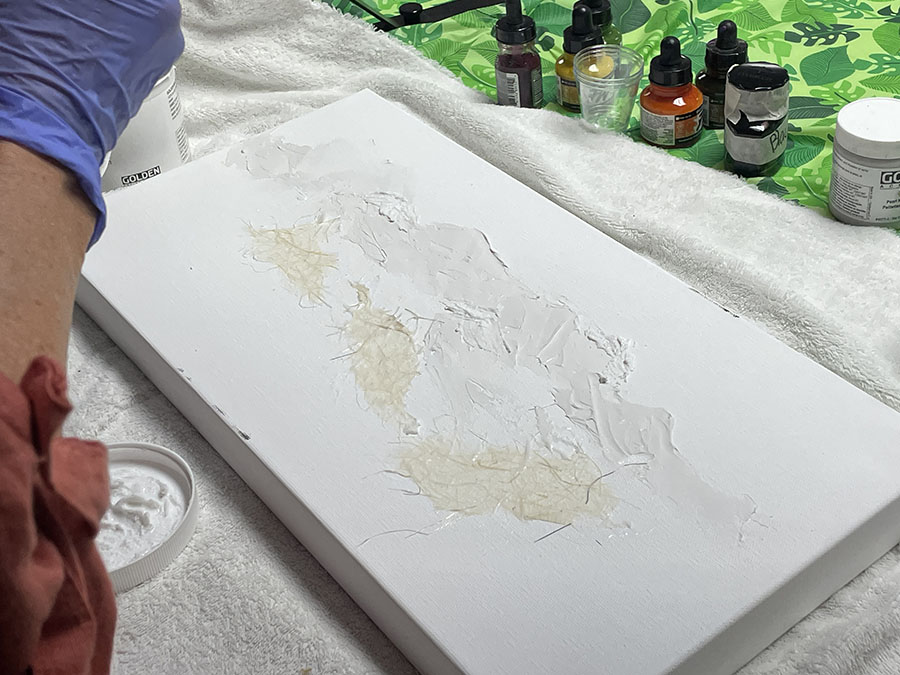
Karen began her long canvas painting by applying molding paste on a dry canvas to create a mountain range. She does not apply any gesso to the canvas before painting, as almost all store bought canvases come gessoed.
After that, she tore up small pieces of Kinwasi paper and applied those using matte medium, below and on top of the paper to adhere it to the canvas. (The paper will ‘disappear’ after it dries, leaving just the strings.)
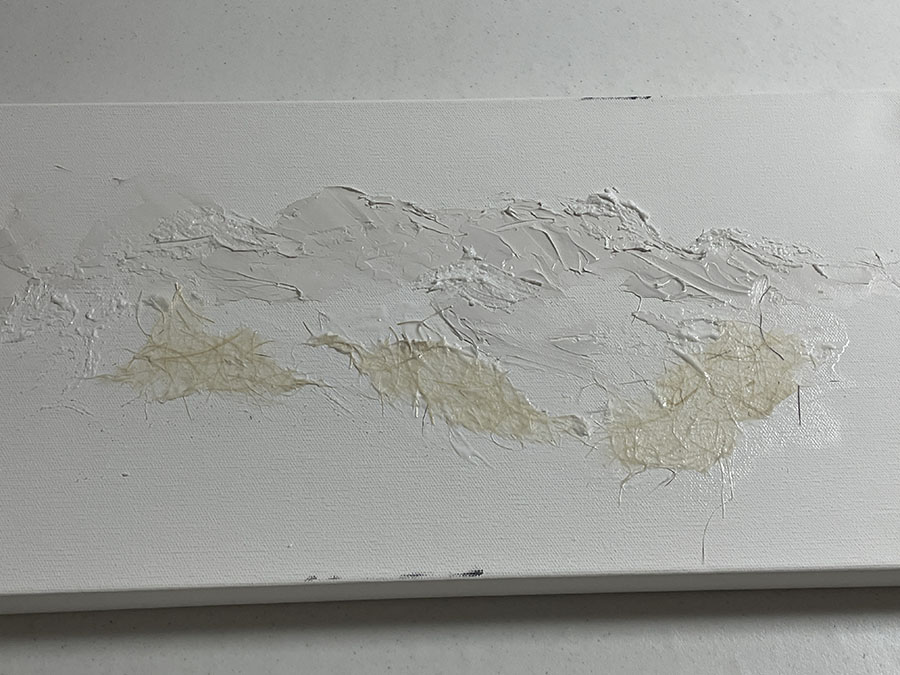
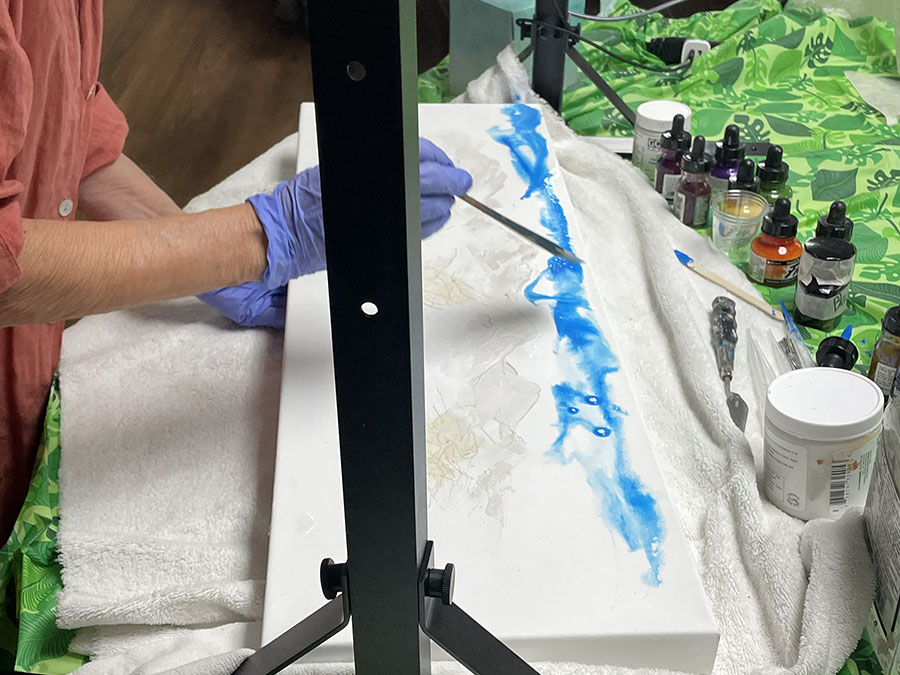
She then lets everything dry for a few hours, but because this was a one-hour demonstration, she came prepared with another canvas ready to paint on!
Using acrylic inks, straight out of the bottle, she applied a blue color with a pipette for the sky. She always wets the area first, before applying the inks, and likes to work from top to bottom. She said, that the inks are similar to working with watercolor paints, painting from light to dark, and the ability to layer colors. She did note that once inks are dry, they are permanent, like acrylic paint.
Normally, she would let the sky dry before continuing, but due to time, she continued.
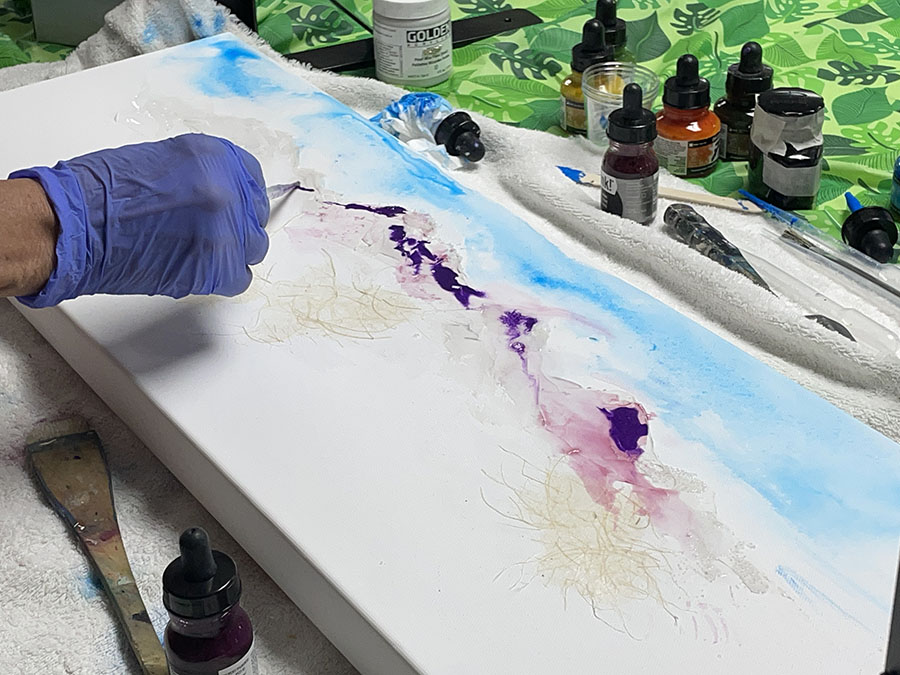
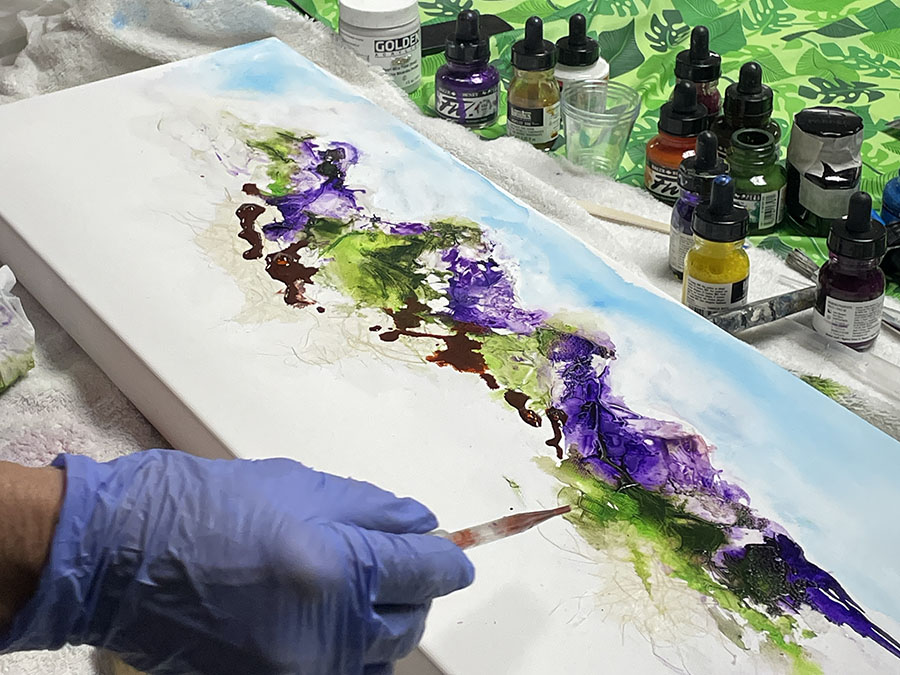
Wetting the canvas again over the mountain range, she applied three purple colors, ranging from light and medium to dark values to the mountains and let them mingle and mix. If you don’t like something, just mop it up or blot it out with a tissue.
Karen uses a small Hake brush loaded with water or a spray bottle to wet areas.
She next added the foreground colors, again wetting the area and dropping in colors with a pipette, letting them mix and mingle. She pays close attention to her lights and dark colors, stating that it is the darks that create the drama. She will also use her pipette as a drawing tool to move the wet ink around.
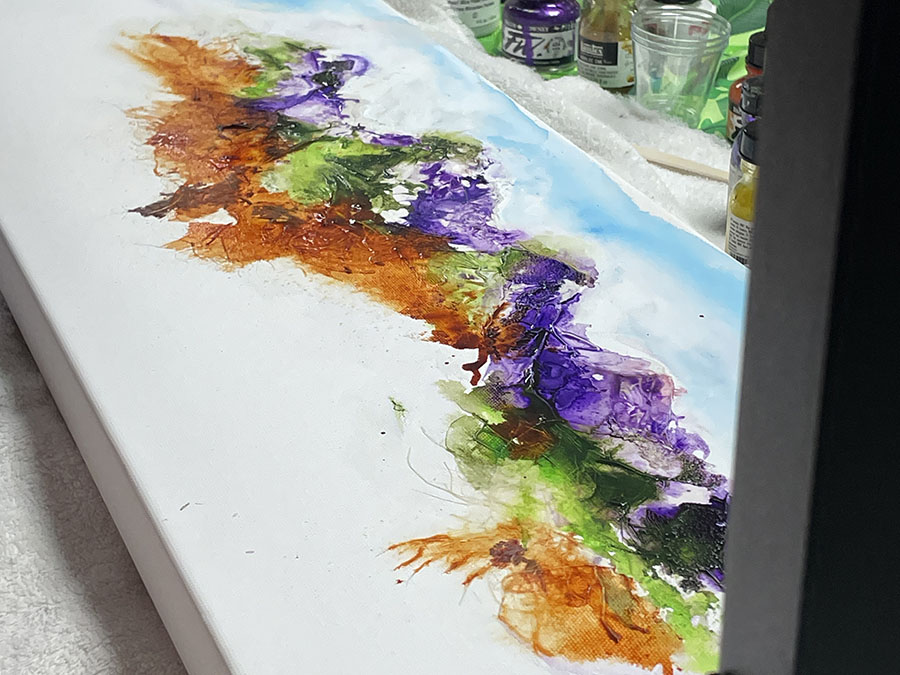
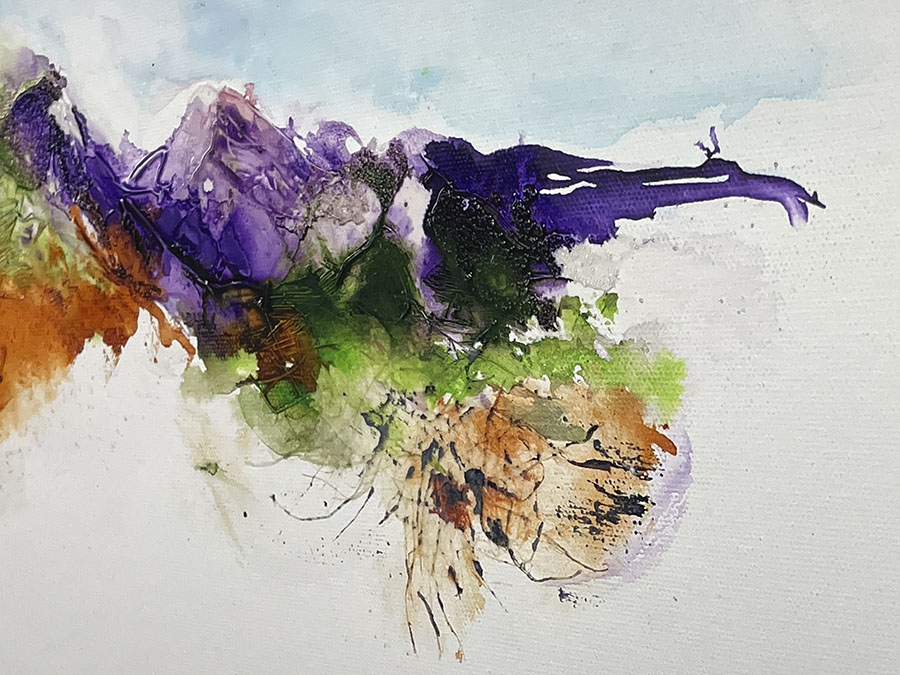
To create more texture or interest to her still wet painting, Karen will sprinkle on sparkly pearl mica flakes to certain areas and use glass bead gel. The glass bead gel resembles snow when applied to the tops of the mountains! Karen also likes to use a marbling spray. She likes the wispy lines the spray makes, and said it’s great for making tree branches. Just cover up the areas where you don’t want the spray to go!
Leave your canvas flat to dry, and once it is completely dry, Karen will add more darks. Using a palette knife pushed into black acrylic paint, she gently runs the knife over the top of the ’strings’ that were in the Kinwashi paper. This highlights them and adds more contrast.
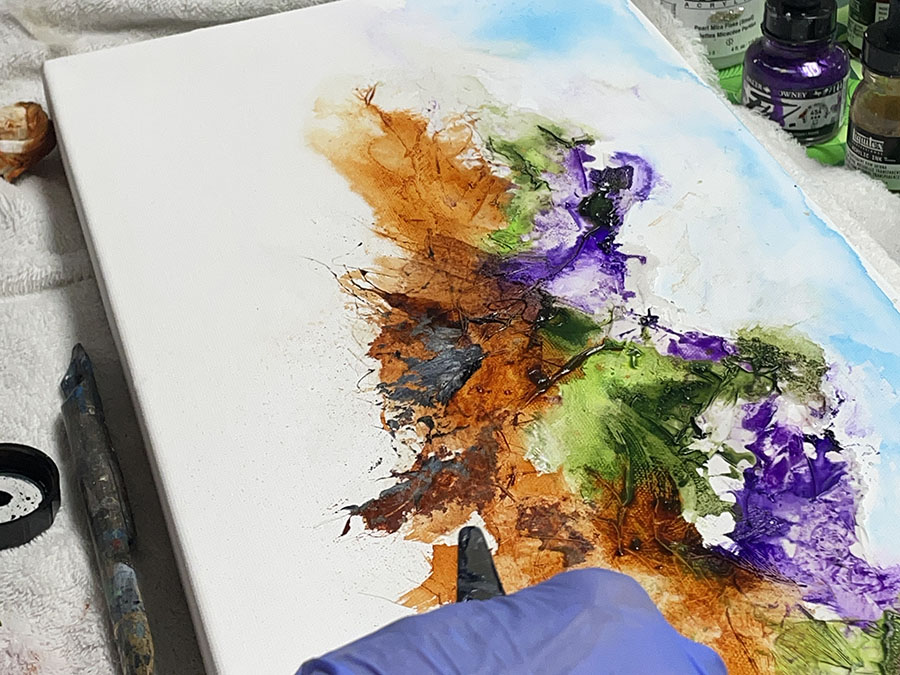
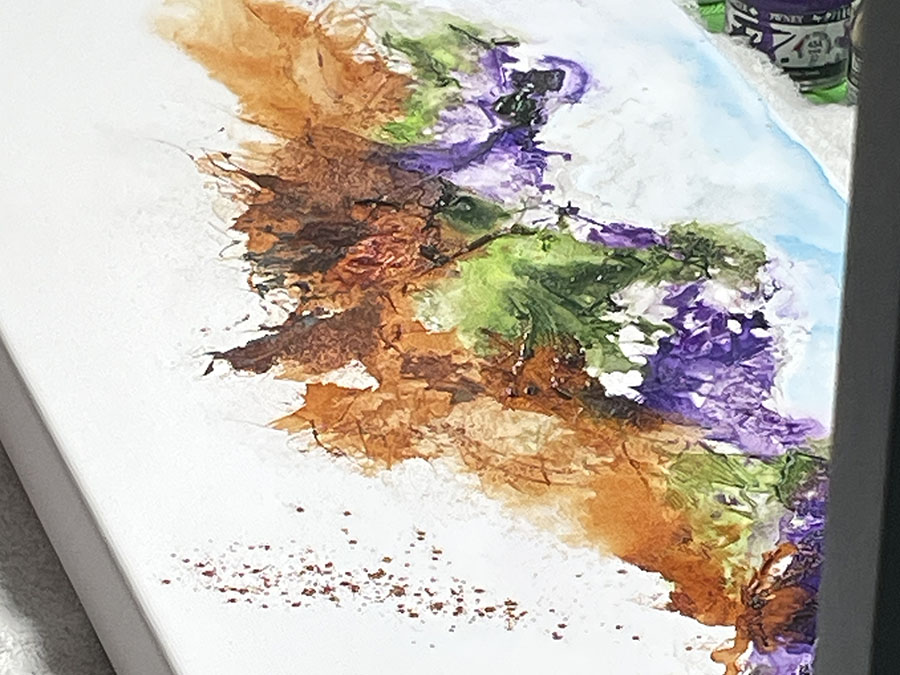
She finishes her canvas painting by spraying, not brushing, an acrylic UV gloss over the entire canvas to seal it. Then she paints the edges of the canvas black.
If you happen to get a drip or you want to remove some ink, use a Mr. Clean magic eraser before the ink dries.
Karen also teaches watercolor and acrylic painting for all skill levels. Visit her website here, or visit the Gallery 113 website here.
