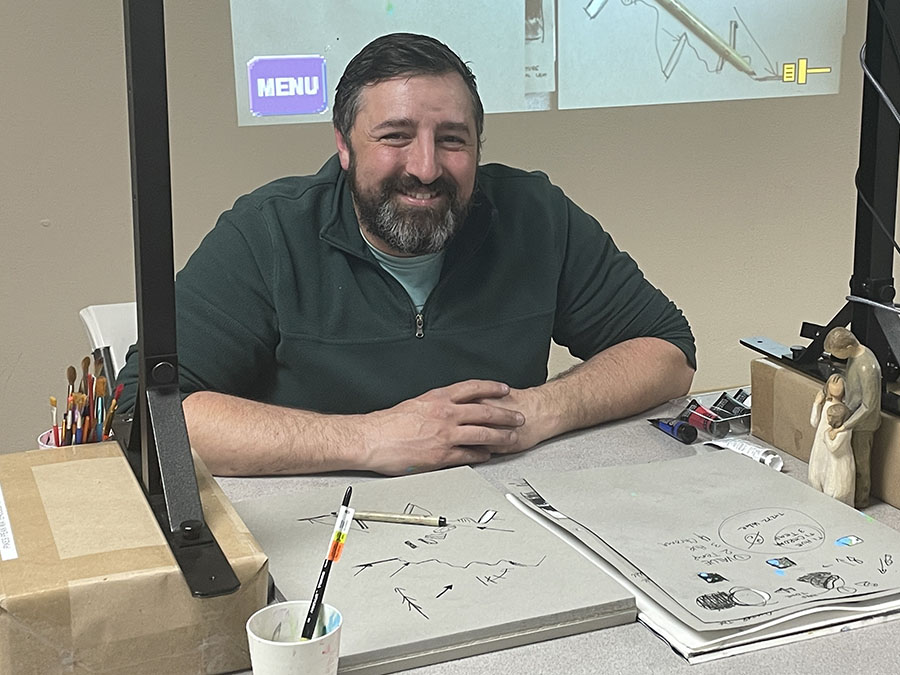
Our guest speaker for March was Trevor Thomas. He talked about and demonstrated the power of light and shadows in paintings. Trevor said shadows are like mirrors, reflecting the colors of nearby objects.
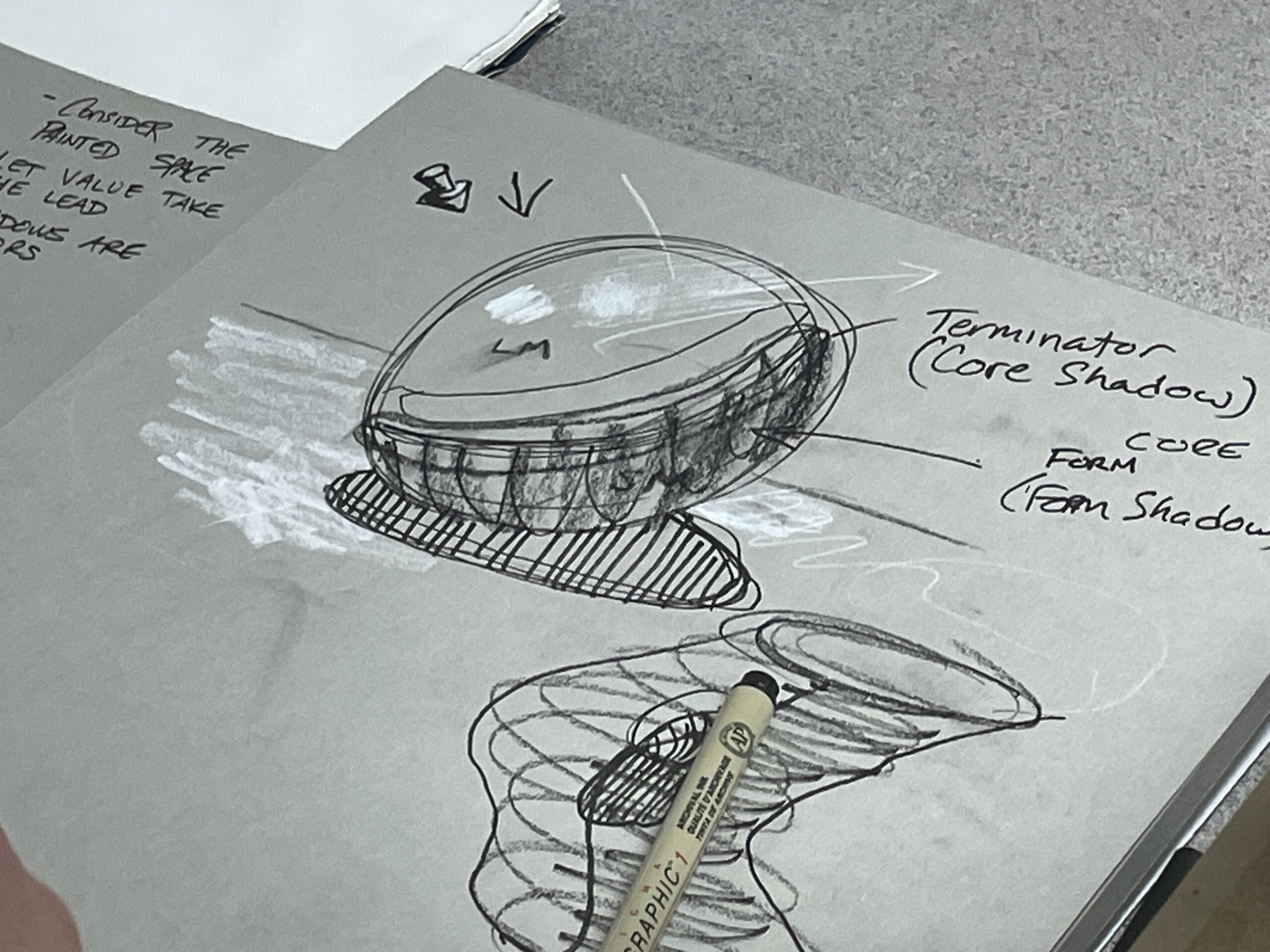
There are four main things to keep in mind when working with shadows:
1. The Light Mass, the direction the light is coming from. This area shows the most color and often has a highlight.
2. The Terminator or Core Shadow. The core shadow is in between the lightest and darkest area of a shape. It is usually the darkest area on an object, as there is no reflected light in this area.
3. The Form Shadow. This is the area opposite the light mass, and will often have reflected light or colors of nearby things in it.
4. Cast Shadow. The shadow the object creates. It is usually darkest near the object and has softer edges as it expand out.
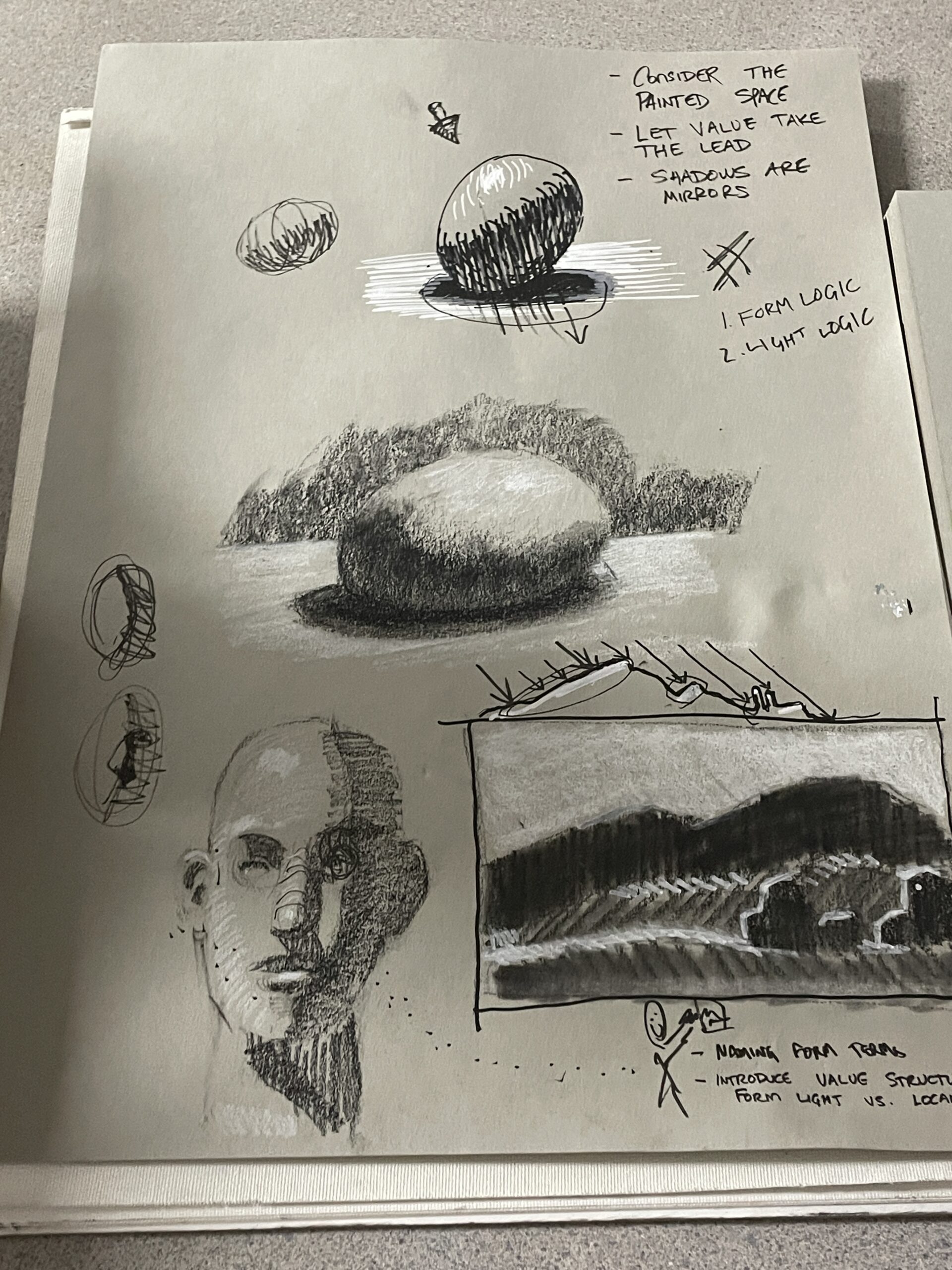
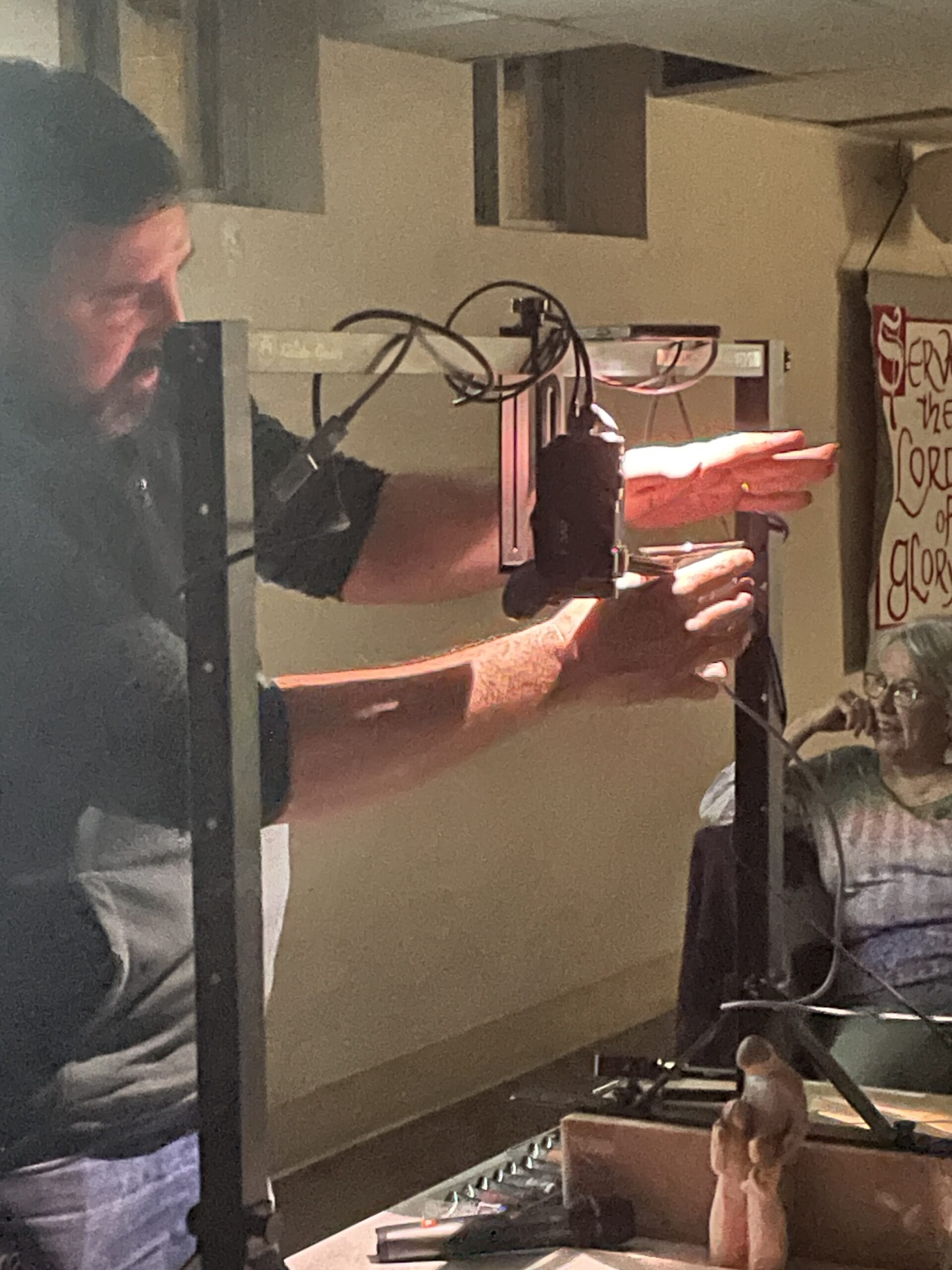
Trevor suggested organizing your painting as if painting on a grey day, then add the light. Keep in mind the value, temperature, hue and chroma of your colors.
He also showed us how reflected color can change a color, by holding his hand under a light, then placing a colored object below his hand. The color of his palm changed as he used different colored objects.
Shadows will also change depending on your view point.
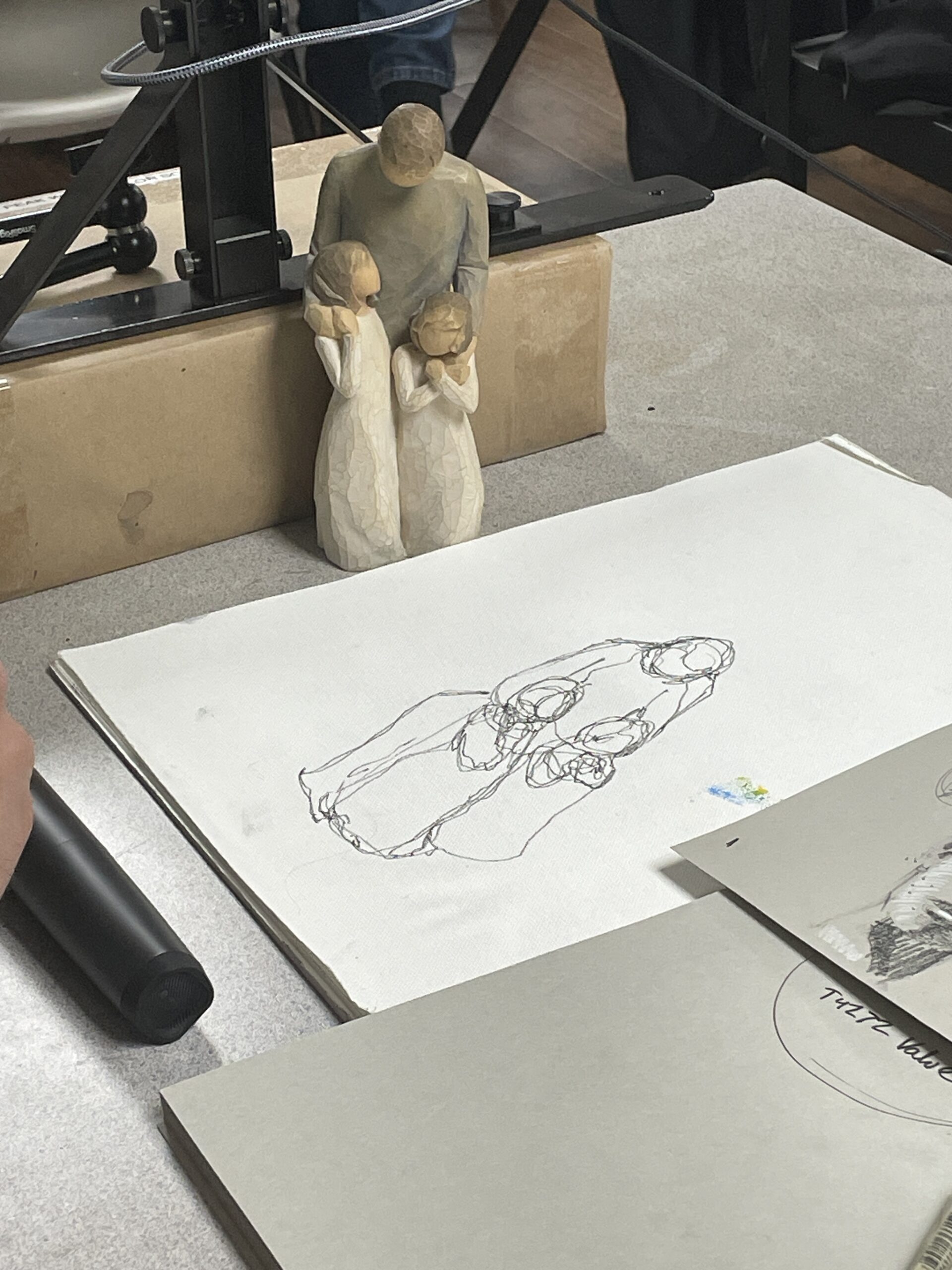
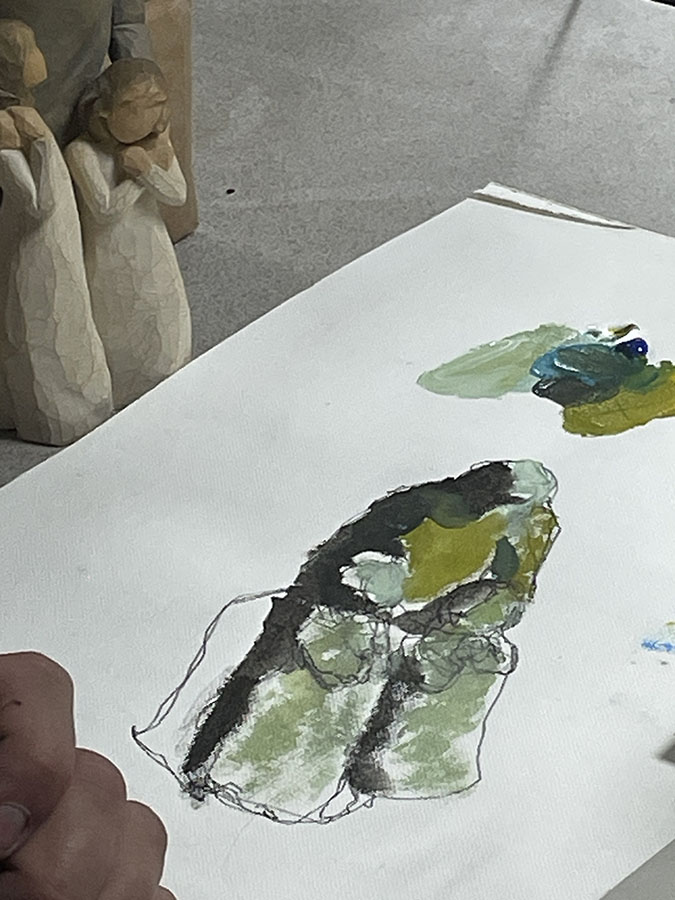
Using a small Father’s Day gift from his children, Trevor did a quick painting of it using just the fundamentals of painting shadows. He explained that values have relationships and grey is a tone, not a color.
By looking at his gift, he painted the values first, then added color, and bounced light in the shadows. He also mixed warmer colors to add to the highlights and cooler colors in the shadow mass. He said to always keep in mind the color of the light.
Currently, Trevor Wade Thomas teaches foundations, materials, and techniques both privately and at local institutions. He told us that imagination is the failure of boredom. You can visit Trevor’s website here.
