
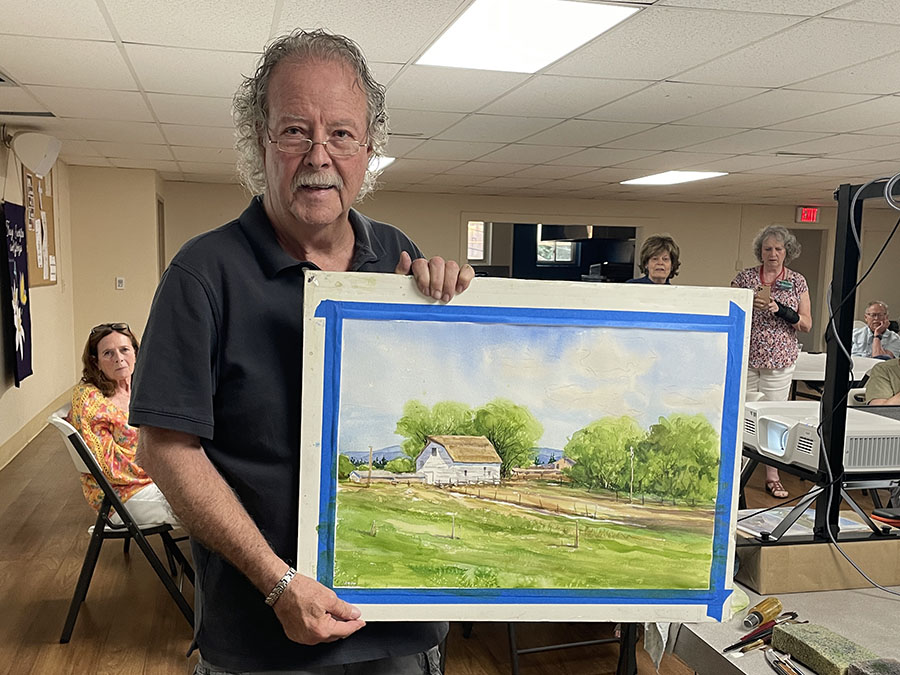
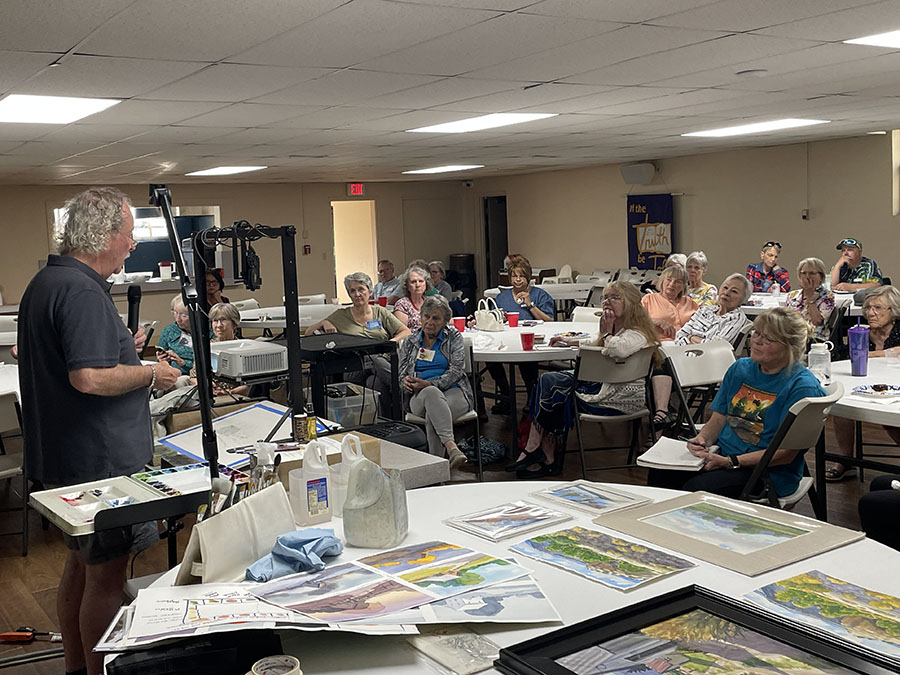
PPWS’s member Tom Lockhart was our guest speaker and did a landscaped demonstration for us all.
Born and raised in Southern Colorado, Tom began painting at the young age of nine. Tom enjoys painting landscapes, plein-air painting, and has won numerous awards and been featured in magazines! His wife Sandy also shared that he paints beautiful flowers!
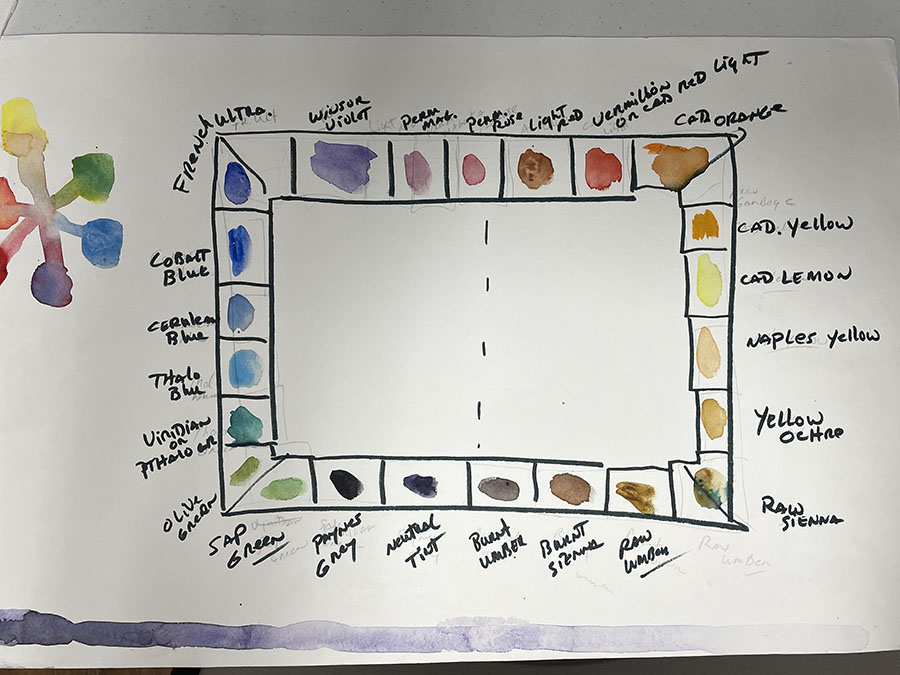
Tom began his demonstration by showing us a painting of his pallet! He then went on to explain how he does preliminarily monochromatic sketches and then how he will do color version, sometimes varying the season.
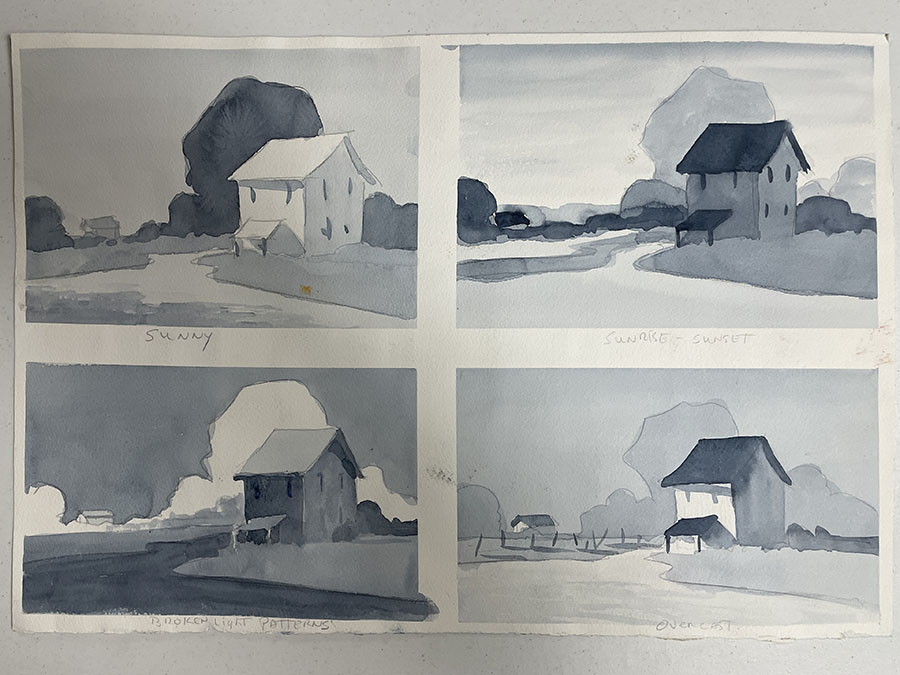
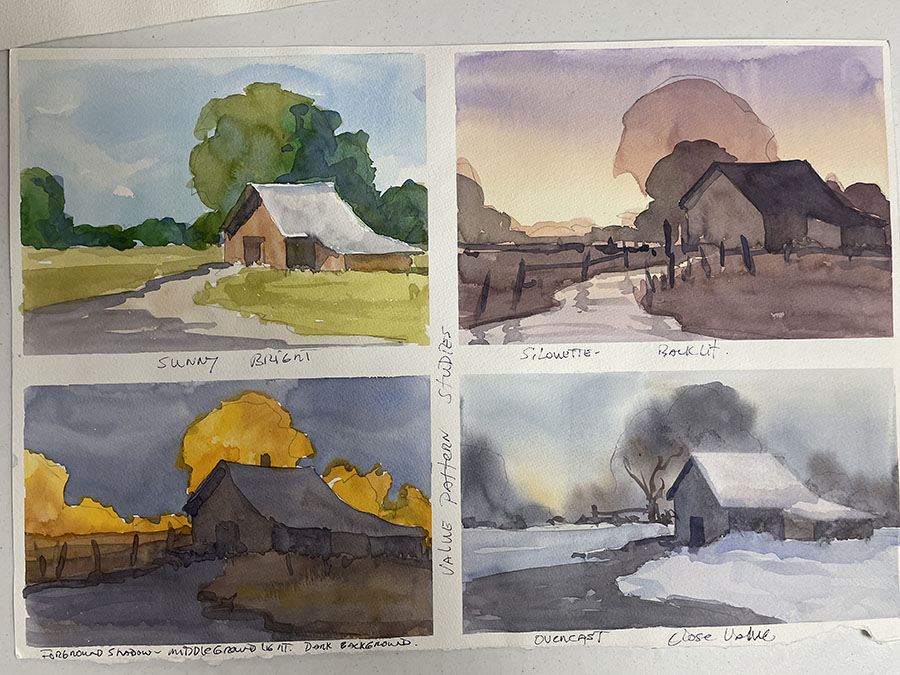
Tom worked from a photo he had taken Longmont, Colorado. His wife Sandy said it’s not unusual when they are traveling for Tom to suddenly stop the car, jump out, and take photos and draw a sketch of things they see along the way!
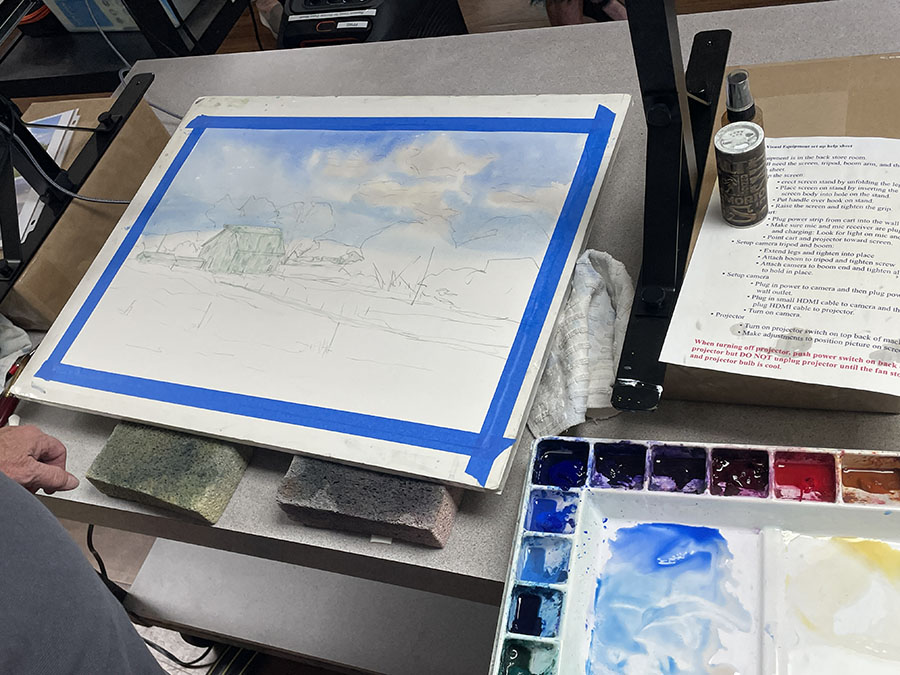
He began his painting using the wet into wet technique, painting the sky and clouds. The barn, fence posts and distance buildings had all been masked out so he could pant right over them.
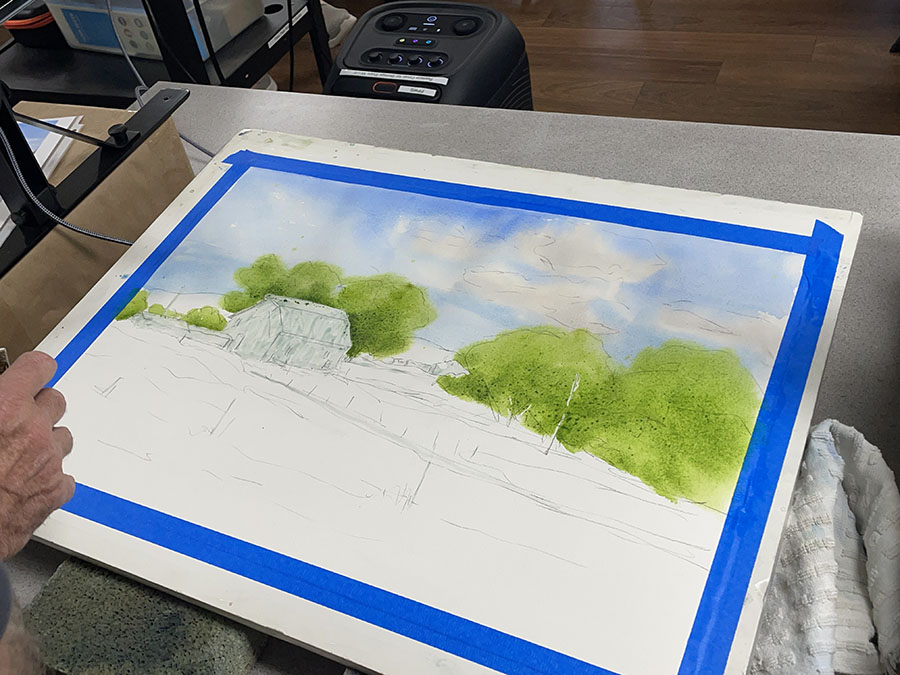
He then blocked in the trees using olive green, sap green, and a touch of green’s compliment, Alizarin Crimson, to darken the greens for the shadows. He then sprinkled table salt on the trees to add texture.
Tom then began tackling the foreground using raw sienna and raw umber, then dried his painting before adding his greens. He said to start out light and paint right up to what you just did.
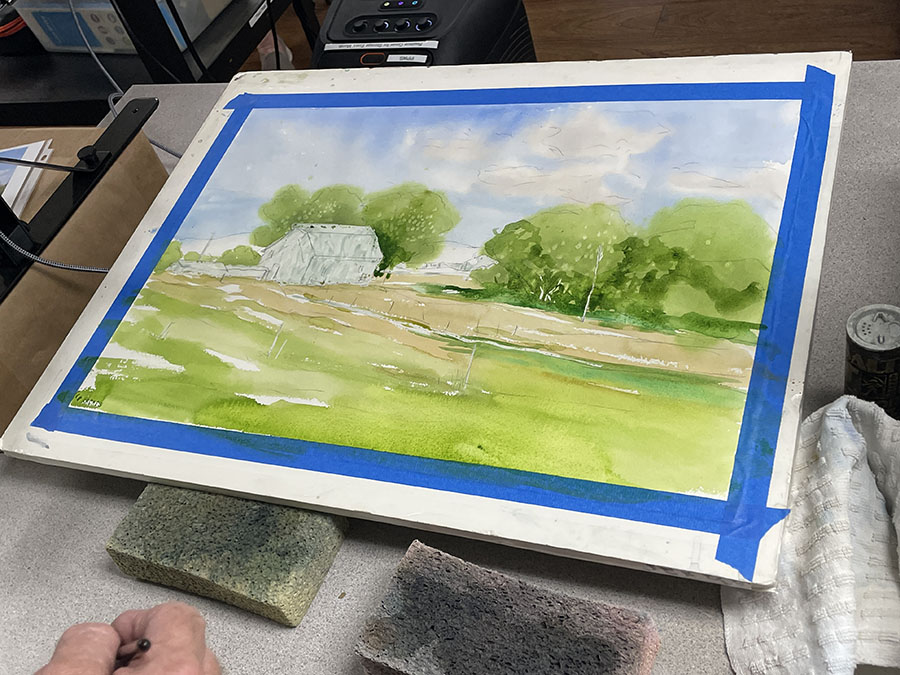
Tom continued adding layers of paint in the foreground and in the trees. Along with adding shadows. For a cooler shadow color under the trees Tom used Veridian Green. Before removing the masking fluid from the barn, fence posts and distant buildings, Tom painted in the distant mountains using ultramarine blue.
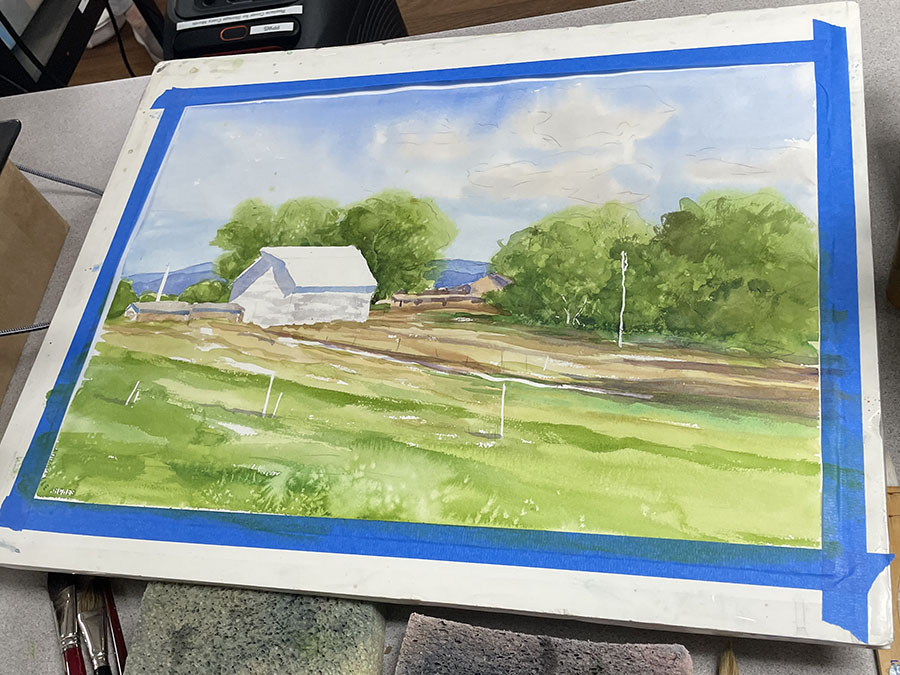
After the masking fluid was removed, Tom added cobalt blue shadows on the barn eaves and used a dry brush technique to suggest the planks of wood on the side of the barn. Using burnt umber and yellow Ocher, he then painted the roof of the barn.
To add some branches in the trees Tom used his knife to gently scratch out paint in the trees and then added more branches using a rigger brush and burnt umber.
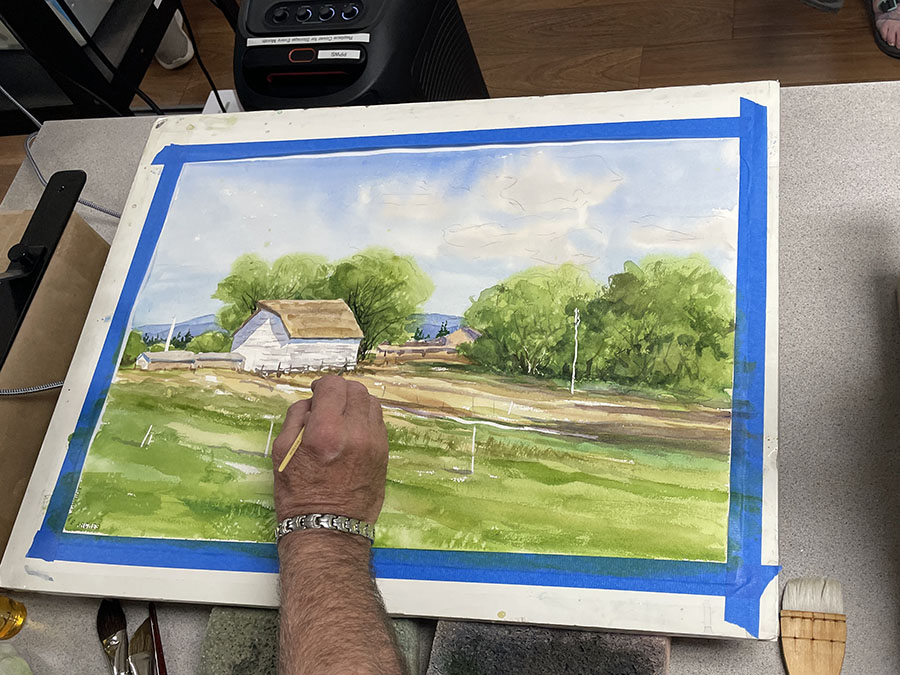
Details were added and to add his darkest shadows, Tom used Dioxazine Purple.
Tom uses an assortment of watercolor paints, but prefers Holbein paints for their ability to stay wet longer in the palette.
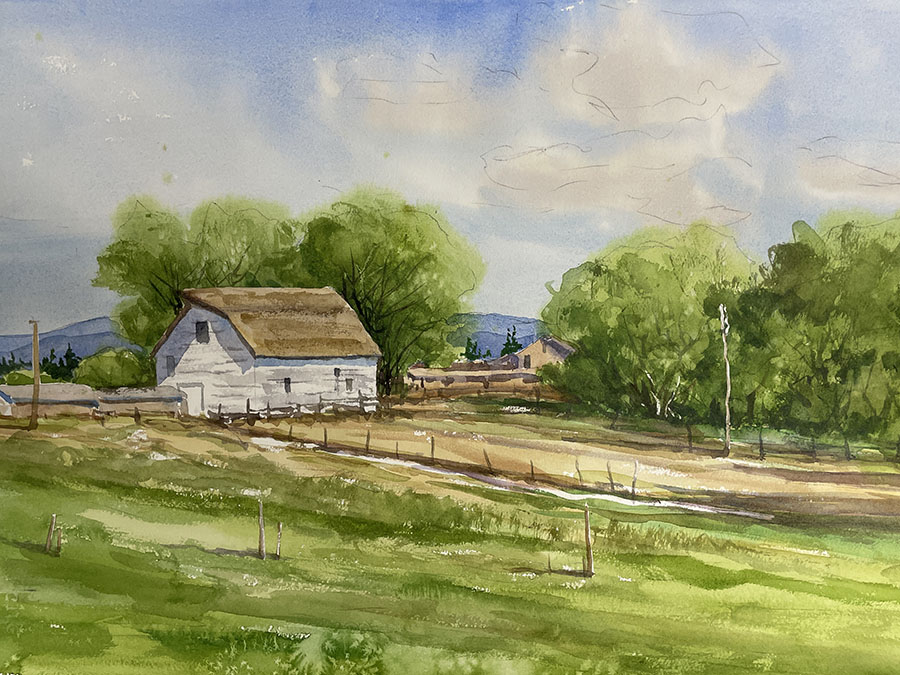
And here is the finished painting! To see more of Tom’s work, (he also is an accomplished oil painter) please visit his website.
