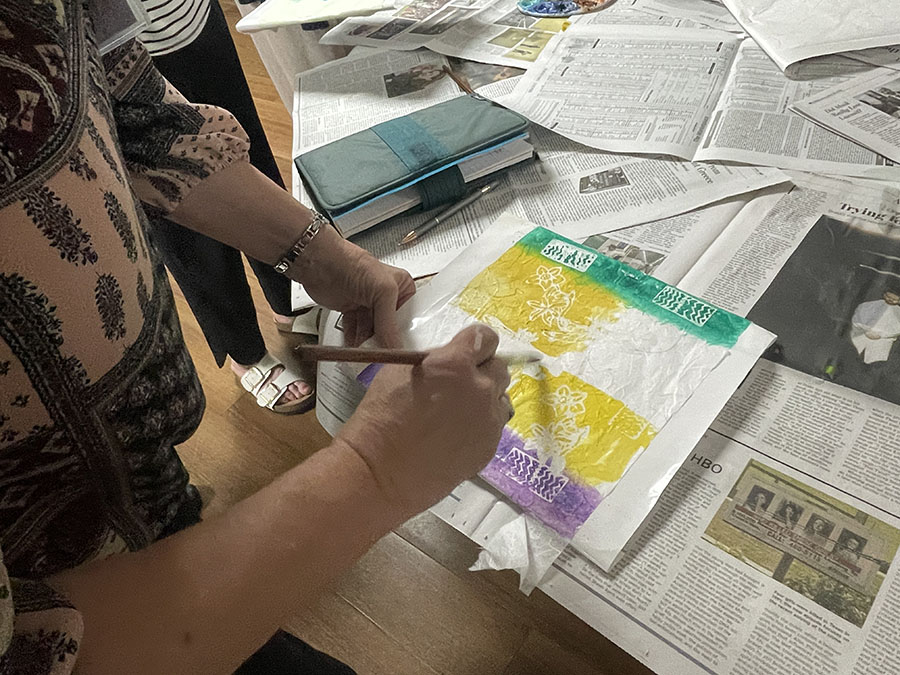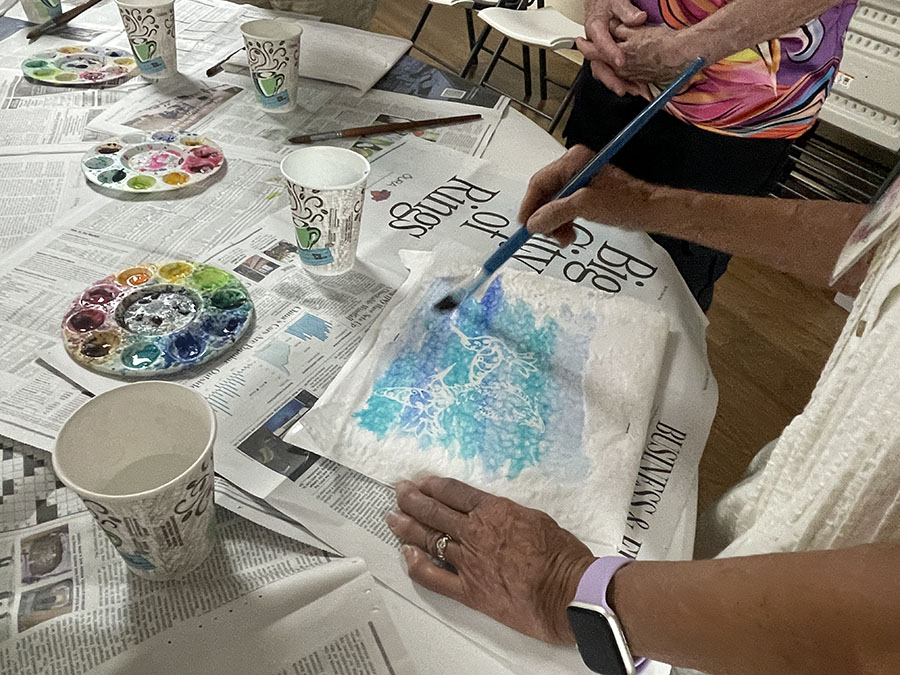
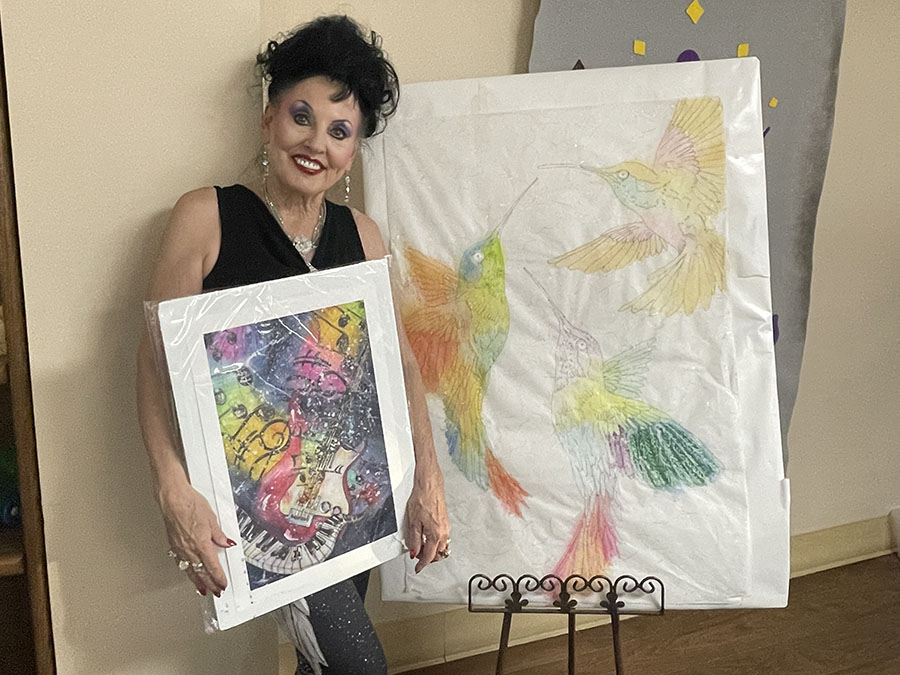
It was all hands on deck last night when PPWS member Carol Naylor brought wax, stamps, paint, brushes, and rice paper for everyone to play with!
Carol, a Signature member and former President of the Pikes Peak Watercolor Society, is a well-known watercolor batik artist who used to hold lavish batik classes in her beautiful home. She would wine and dine her students with some of the most amazing food and drinks, while everyone learned to paint a watercolor batik!
Carol explained the process of creating beautiful watercolor batiks, along with many tips and tricks.
Batiks use a wax resist to preserve whites or to cover up an area already painted, to preserve that area or color.
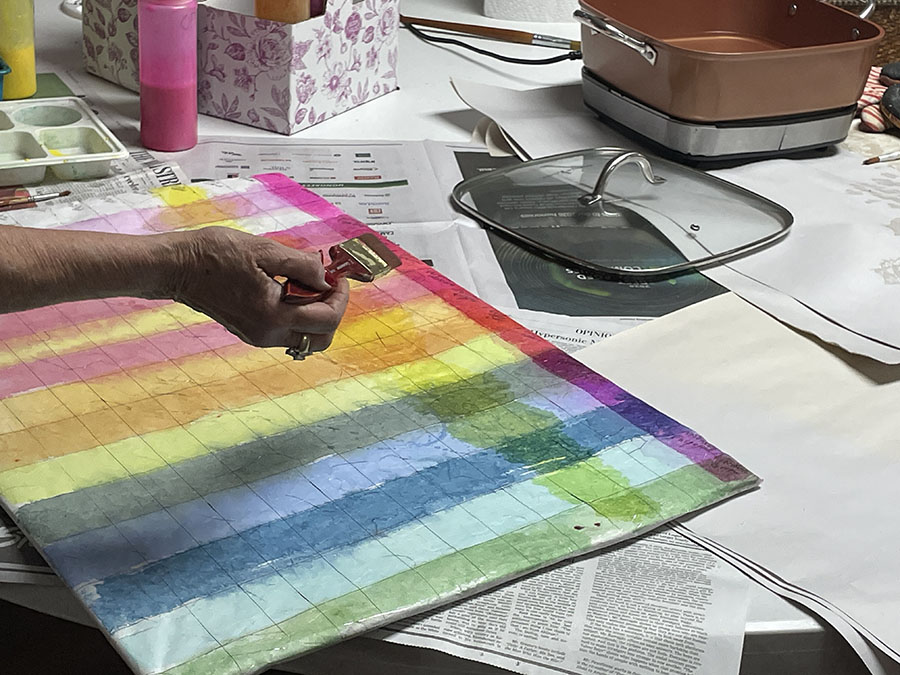
A watercolor batik is done on rice paper, or tissue paper, as she called it. It is similar to tissue paper and also toilet paper; if it gets too wet it can ‘melt’ and easily tear! She said going to our local art store, Meininger’s can be a dangerous place for her, as they have a large variety of rice papers! Many have strands of silver or gold in them.
Carol uses a ‘limited’ palette of 16 colors, ranging from yellows, reds, blues, teals, and one green. She explained that painting on rice paper is similar to painting on watercolor paper, except that the paint will bleed! She showed us how you can build up the colors and create second colors by layering your paint over the first DRY layer of paint. She layers many times to create luscious, rich color.
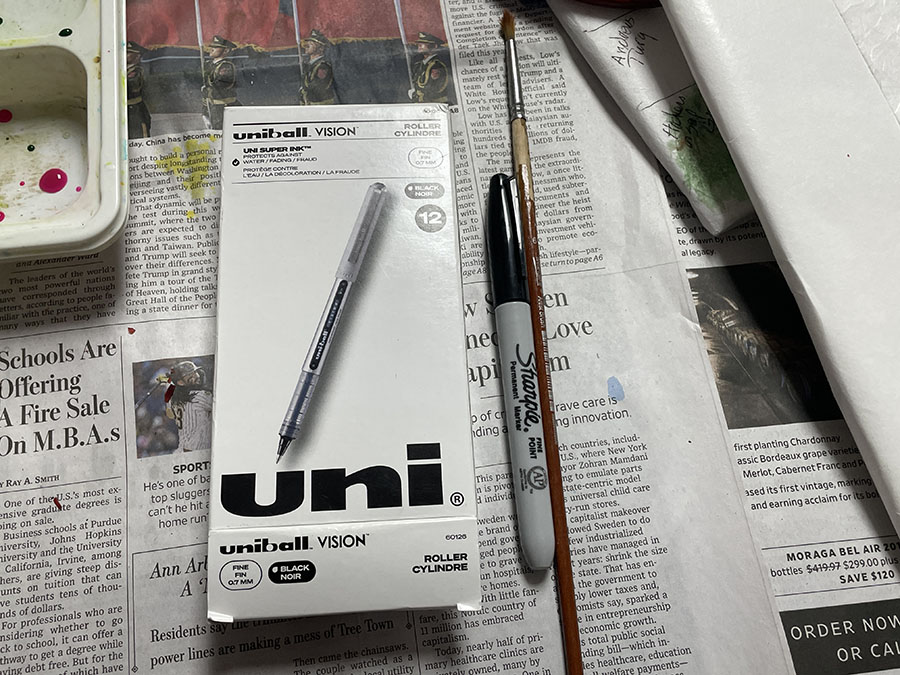
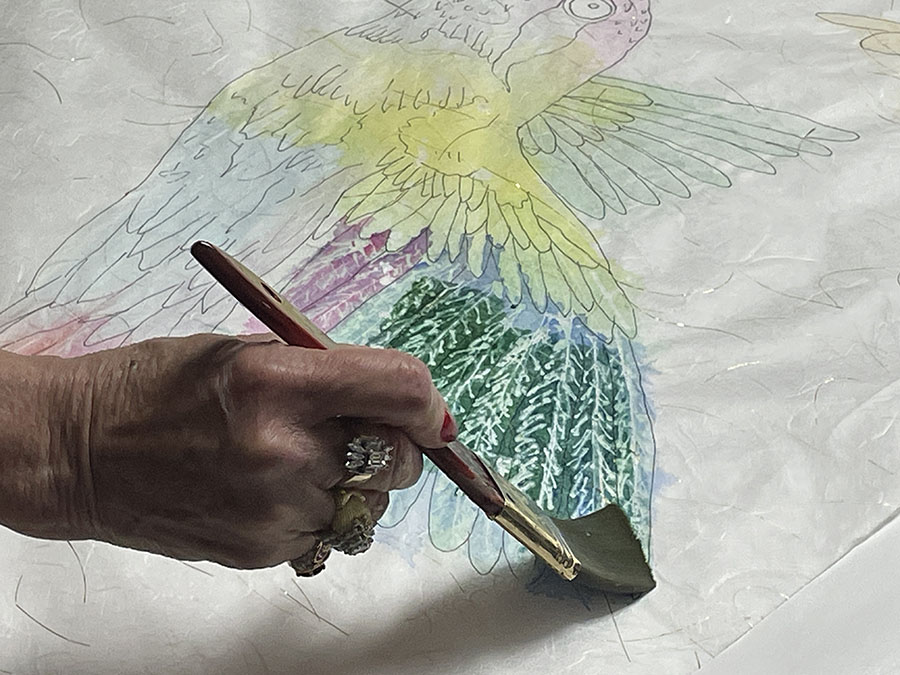
As with traditional watercolor, Carol first draws on paper or velum, then places that under the rice paper and uses a Uniball black pen to draw or transfer her design. Never use a pencil, as it will rip the fragile paper! Watercolor pencils are also discouraged, as they could bleed. There was some discussion on using fine-tip Sharpies, as they could also bleed when they get wet.
To create fine lines of wax, Carol uses a Tjanting tool. This is a pen-like tool with a small container on the end to hold hot wax with a fine tip. She uses this to create fine lines in on a painting where she wants to preserve the white or to draw lines on top of dry paint.
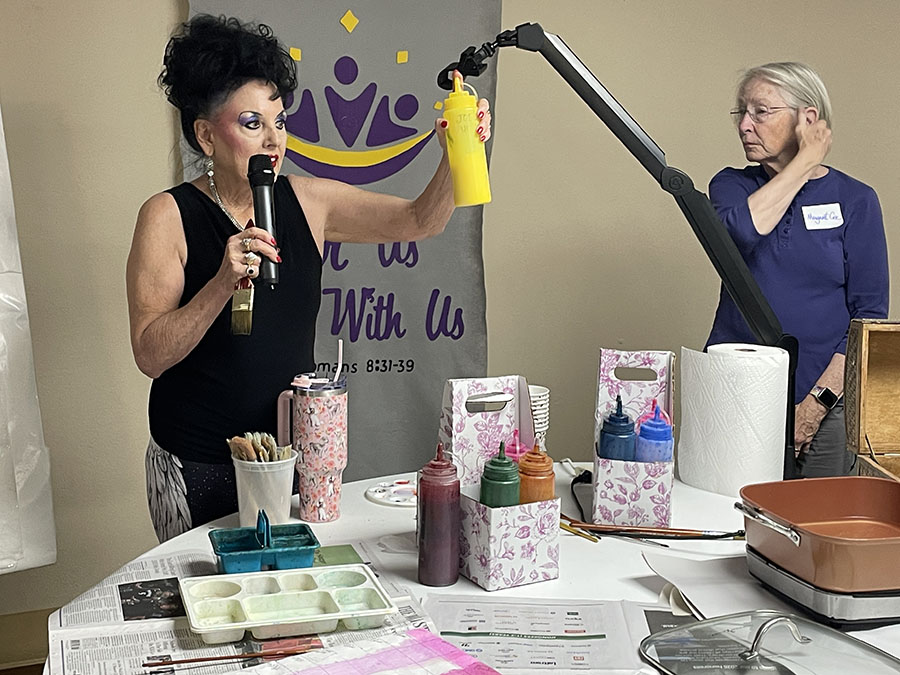
One tip Carol gave us was how to ’squeeze’ the last little bit out of a tube of paint! Using kitchen squeeze bottles, she cuts up the old tube of paint, places it in the squeeze bottle, and then adds water! If you do this, always shake the bottle before using, and beware! If it sits too long, it could start to smell, but the smell goes away once it’s on the paper!
Another fun thing to do with the hot wax is to dip an old brush into it, then splatter the wax onto the paper!
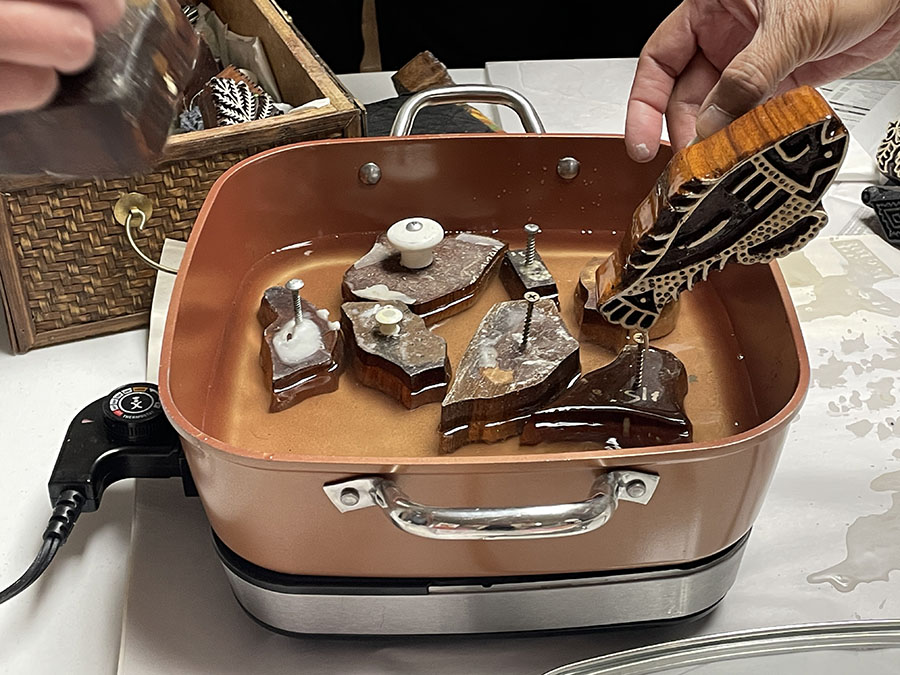
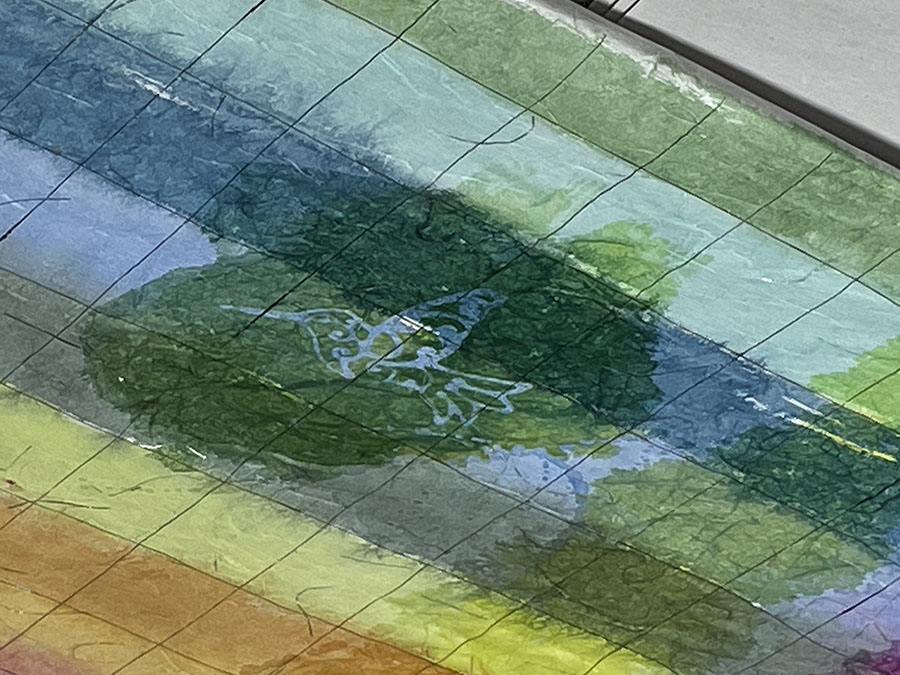
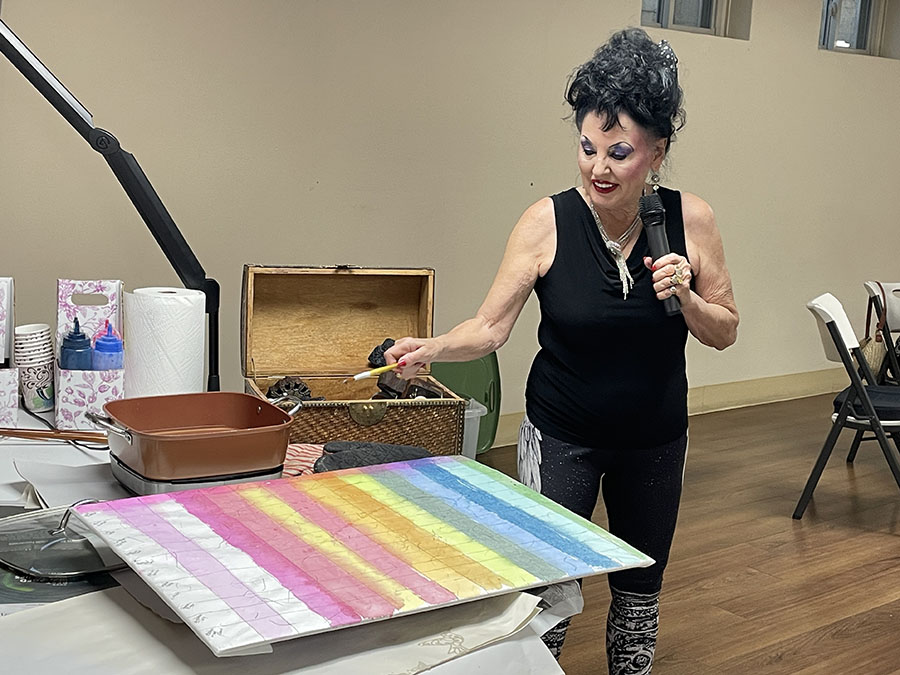
She brought along her decorative box filled with large wood block stencils. To use one of these stencils, she placed it face down in the hot wax, then waited a minute. Then tapped the side of the stencil to remove excess wax and stamped it once on some craft paper to remove any drips or blobs of wax. While the wax on the stamp was still warm, she stamped her paper. This can be done as a resist to preserve the white of the paper, or over a dry color wash.
When your watercolor batik is all done, sign it, then cover the entire paper with hot wax. This seals the painting, brightens the colors, and preserves your work. Then place the painting on a few layers of craft paper and use a hot iron, set on the linen setting, and iron out all of the wax. This step could take a few passes. She warned us about not using newspapers to do this, as the ink in the newspaper could transfer to your painting!
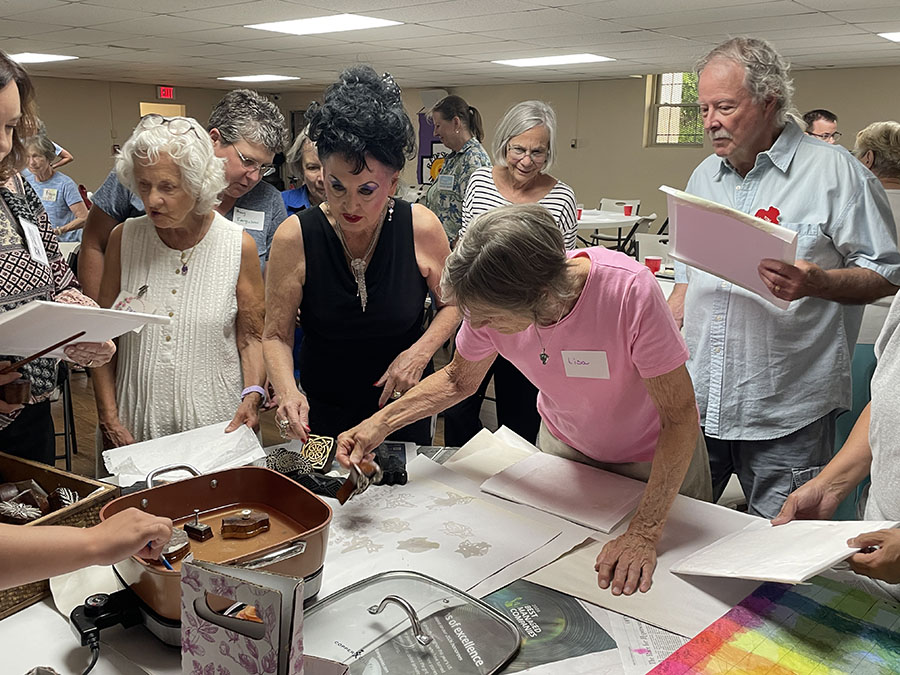
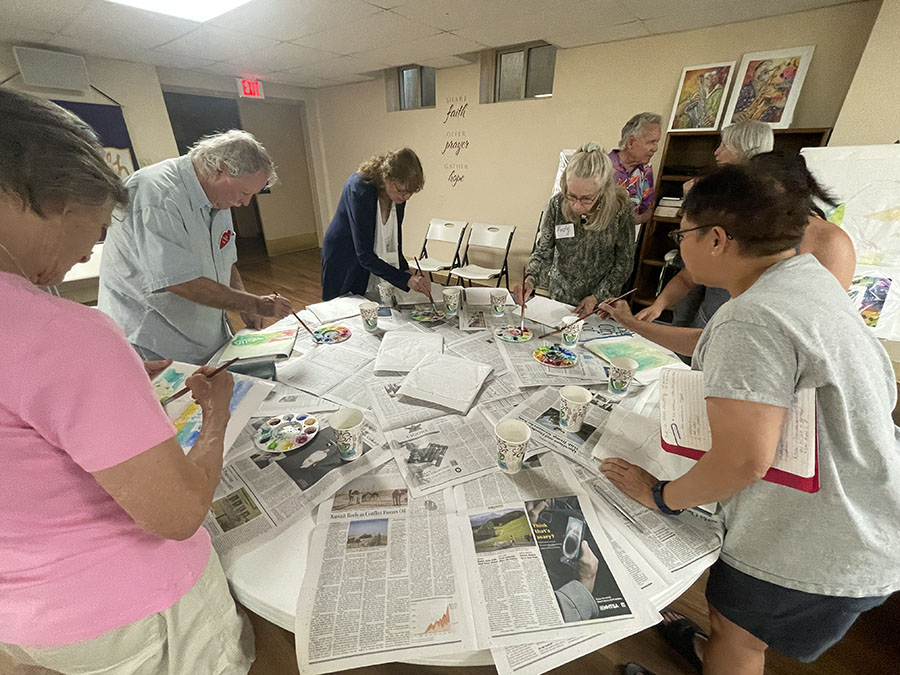
It was then time for everyone to play with all the paints and stamps! Everyone had fun experimenting and creating mini works of art!